
Two weeks is the golden duration for the Philippines — long enough to see three regions properly, short enough to stay affordable and unhurried. This 2 weeks in Philippines itinerary shares the exact structure our specialists build most often: Palawan’s lagoons first, the Cebu corridor in the middle, Bohol’s calm to finish. You get the day-by-day rhythm, the transfer logic behind it, and the pacing rules that keep two weeks feeling like freedom instead of a ferry schedule.
01.Why Two Weeks Is the Sweet Spot
One week forces a choice between regions; three weeks can strain annual leave. Two weeks threads the needle: with flights eating a day at each end, you still bank twelve full island days — enough for Palawan’s famous lagoons, Cebu’s wildlife and waterfalls, and Bohol’s gentle hills, plus the rest days that turn sightseeing into holidaying. Travellers consistently rate two-week trips the most satisfying: enough variety to feel epic, enough repetition to feel like living somewhere.
The structure that works is three bases, one rhythm: roughly five nights in Palawan, four in the Cebu area, three in Bohol, with transfers between. Each base hosts day trips, so you unpack three times in twelve days — not ten. More than three bases in two weeks and the trip starts living out of a suitcase; fewer and you waste the breadth the country offers. Three is the magic number, and the order below is deliberate.
- Days one to five: El Nido and Coron, the lagoon heartland.
- Days six to nine: Cebu — whale sharks, canyons, sardines.
- Days ten to twelve: Bohol — hills, tarsiers, calm beaches.
- Days thirteen to fourteen: slow morning, fly home glowing.
02.Days One to Five: Palawan’s Lagoons
Land in Manila and connect straight to El Nido (or overnight near the airport if connections are tight). Days one and two belong to Bacuit Bay: the Big and Small Lagoons by kayak, Secret Beach’s hidden entrance, and Shimizu Island’s snorkelling — the classic island-hopping days that justify every photo you have ever seen of this country. Day three stretches north to Nacpan Beach, four kilometres of golden sand with a lazy lunch and an optional zipline for the restless.
Day four takes the fast ferry to Coron — two scenic hours across open water. Coron rewards with different water altogether: Kayangan Lake’s mirror clarity, Twin Lagoon’s hidden entrance, and the easy snorkelling of Siete Pecados. Day five closes Palawan with Mount Tapyas’ staircase viewpoint and a soak at the seaside hot springs — legs tired, camera full, exactly on schedule for the next act.
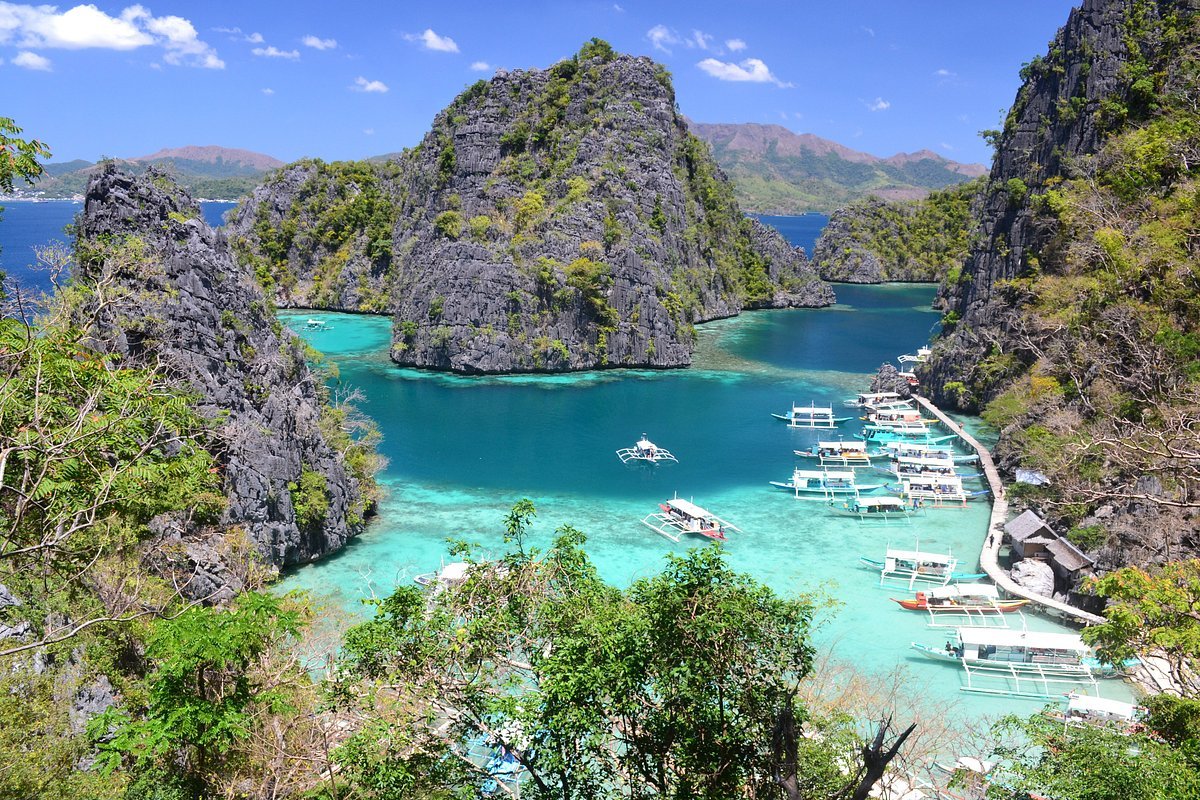
Pacing note: schedule boat days back to back but keep evenings free. Palawan’s sunsets are an event, not a background — Corong Corong’s beach bars exist precisely for the hour when the cliffs turn copper.
03.Days Six to Nine: Cebu’s Wildlife and Waterfalls
Fly Coron to Cebu in the morning and feel the trip change gear. Day six explores the city lightly — the Spanish-walled heritage of the old town, Magellan’s Cross, and the celebrated lechon lunch that Cebuans defend as the country’s best. Day seven heads south before sunrise for the whale sharks of Oslob — an early, respectful, strictly-rules encounter with fish the size of buses — followed by the thundering tiers of Tumalog Falls.
Day eight is pure adrenaline: canyoneering at Kawasan Falls, jumping, sliding and swimming down a turquoise canyon with licensed guides, then lunch above the falls. Day nine delivers the strangest, most beautiful sight of the trip — the sardine run of Moalboal, where millions of sardines swirl into a living tornado just offshore, turtles gliding through the edges. Snorkel it after breakfast and still make it to a beach bar by sunset.
04.Days Ten to Twelve: Bohol’s Gentle Finale
The fast ferry from Cebu to Bohol takes about two hours and delivers you to the trip’s softest chapter. Day ten is the countryside loop: the Chocolate Hills at their greenest, a licensed tarsier sanctuary where tiny wide-eyed primates sleep in the trees, and a floating lunch cruise down the palm-lined Loboc River. Day eleven belongs to the sea — sunrise dolphins off Panglao, snorkelling with turtles at Balicasag Island, and an afternoon doing absolutely nothing on Alona Beach.
Bohol is deliberately last because it ends the trip the way the Philippines deserves to end: unhurried, family-warm, with shallow safe swims and sunsets that ask nothing of you. Day twelve keeps the same promise — beach morning, massage, one final mango shake — before the short flight back to Manila for your connection home, arriving at the airport sun-kissed rather than exhausted.
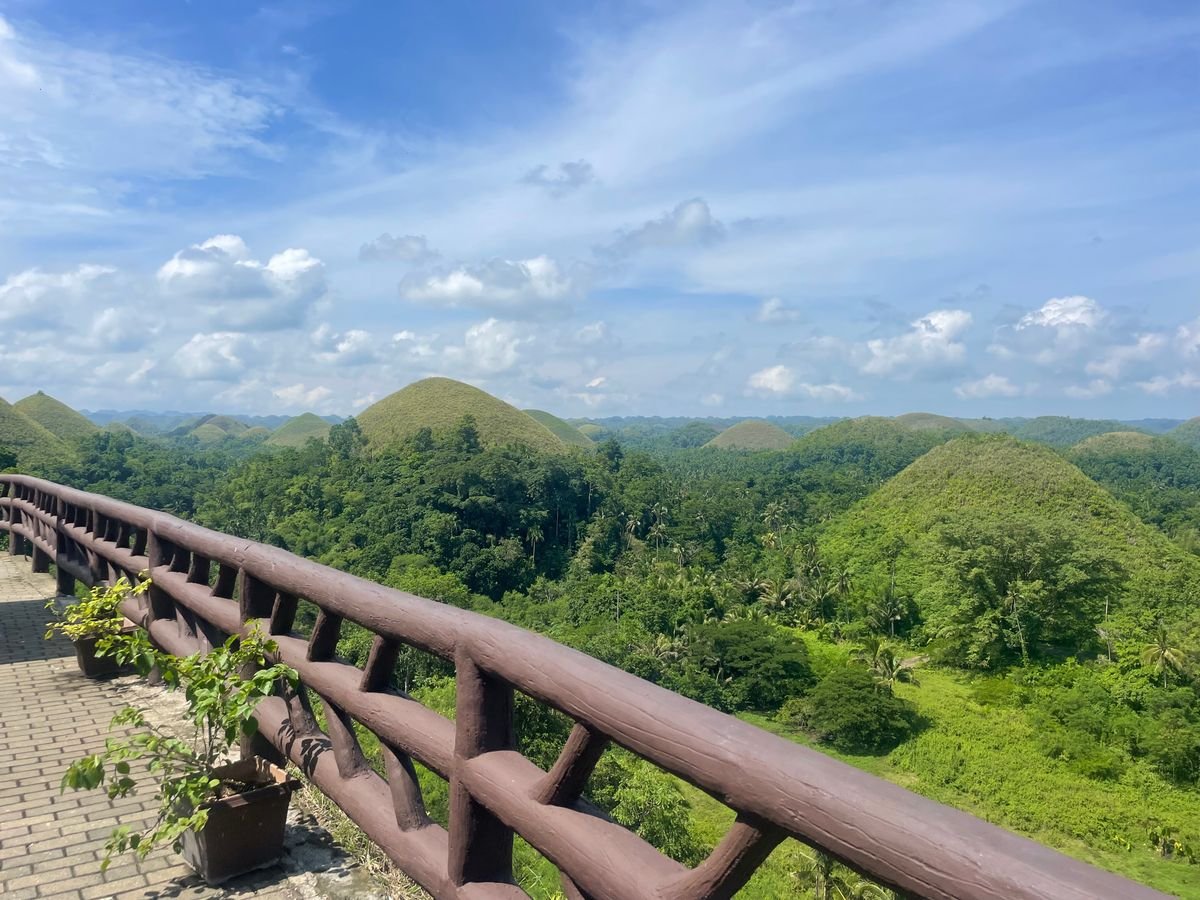
Swap note: travellers who prefer maximum beach over hills can exchange Bohol for extra Coron nights or Boracay. The structure survives the swap — tell your specialist which camp you belong to.
05.The Pacing Rules That Make Two Weeks Work
Rule one: never book boat days on transfer days. Every inter-island move burns energy; combining it with a tour creates the exhaustion travellers blame on the islands. Rule two: one activity per half-day. The Philippines rewards the afternoon swim and the unhurried lunch; two tours a day turns wonder into itinerary. Rule three: protect one slow morning per base — the best traveller conversations happen over breakfasts that end when they end.
Rule four is seasonal: in the greener months, keep the flexible-rescheduling promise of your operator close, because afternoon showers occasionally reorder boat days. Rule five is social: book at least one shared tour even on private trips — the joiner boats are where friendships and local tips happen. Follow these five and twelve island days deliver the rest of your year’s worth of stories.
06.What Two Weeks Costs and How to Book It
Two-week budgets bend to style rather than to rules. Simple travellers use guesthouses, ferries and carinderia meals and travel light on money. Comfort seekers — most of our travellers — choose beachfront resorts, private transfers, guided boat days and most meals bundled into one transparent package price. Celebratory trips add sunset cruises, spa afternoons and room upgrades. Whatever the style, booking early matters more in two weeks than in one: more nights, more rooms, more boats to secure.
The easy way to lock all of this in is one enquiry: send your dates, group size and preferred style, and a specialist returns this exact structure — or your customised version of it — with every stay, transfer and tour arranged and priced transparently. Two weeks in the Philippines is the trip people describe for years afterwards. It deserves to be booked properly, and it starts with a single message.

Whenever those two weeks happen, one truth holds: nobody regrets booking the longer version of this trip. The only common regret is not adding the third week — but that, as they say, is what return trips are for.
07.Three Variants on the Classic Fortnight
The classic route bends gracefully to taste. The beach-first variant flips the order: Cebu’s adrenaline week, then Palawan’s lagoons as the finale — ideal for travellers who want the postcards last, saved like dessert. The slow variant drops Coron and deepens the survivors: five nights El Nido, five nights Bohol area, two in Cebu city — fewer ferries, longer mornings, the fortnight as exhale. The celebration variant keeps the classic spine and upgrades the details: private boats throughout, one sand-dinner evening per base, the resort chapters chosen for their sunset decks.
Family editions swap the canyoneering for the tarsier-and-hills rhythm and add pool days; adventure editions add the wreck dives in Coron and a second canyon run. The fortnight’s architecture — three bases, mornings for the sea, afternoons protected — survives every swap. That is the test of a good itinerary: it bends without breaking, and every variant still ends with sand between the toes.
- Beach-first — postcards saved for last, like dessert.
- Slow edition — fewer ferries, longer mornings.
- Celebration edition — same spine, upgraded details.
08.The Fortnight’s Logistics Layer
Two weeks run on logistics nobody photographs, so here they are, photographed. Luggage: one soft bag plus a daypack; every base offers same-day laundry, so five days of clothing covers fourteen. Money: cards in the cities, cash caches drawn before each island hop, small notes for tricycles and kiosks; one traveller appointed treasurer keeps the group fund honest. Connectivity: the airport SIM covers all three bases; offline maps downloaded per island; the desk’s number saved twice.
Bookings: the fortnight’s anchors — El Nido beachfront, the Bohol family resort, the Boracay finale — hold calendars two to three months out; the shoulder nights flex. Health: the small kit, the insurance, bottled water as reflex. And the fortnight’s quiet luxury: one full do-nothing day, protected in the middle week, where the biggest decision is which hammock. Two weeks done this way feel twice their length — in the good direction.
- Five days of clothing, fourteen of trip — laundry is the trick.
- Anchors early, shoulders flexible — the booking shape.
- One protected nothing-day — the fortnight's quiet luxury.
09.Frequently Asked Questions
Honest answers to the questions travellers ask our desk most often about planning two weeks in the Philippines.
Is two weeks enough time for the Philippines?
Yes — two weeks is the ideal first-visit length. Twelve honest island days cover Palawan's lagoons, Cebu's wildlife and Bohol's calm at a humane pace. One week forces hard choices; two weeks delivers variety and rest in the same trip.
Which islands should two weeks cover?
The classic trio: El Nido and Coron in Palawan, the Cebu corridor for whale sharks and canyons, and Bohol for the Chocolate Hills and gentle beaches. Beach-first travellers can swap Bohol for extra Coron nights or Boracay without breaking the structure.
How tiring is a two-week Philippines itinerary?
Not tiring if paced properly: three bases instead of six, no boat tours on transfer days, one activity per half-day, and one slow morning per base. Follow those rules and the trip feels like living on islands rather than racing through them.
What is the best month for two weeks in the Philippines?
December to May brings the calmest seas and bluest skies — ideal for this route. The greener months work too, with fewer crowds and lower rates, but keep flexible bookings so afternoon showers can reshuffle boat days without stress.
Can you arrange this exact two-week trip?
Yes — this structure is one of our most-booked itineraries. Send your dates, group size and style on the enquiry form or WhatsApp, and a specialist returns the full day-by-day plan with all stays, transfers and tours arranged, free and without obligation.
Can the two-week itinerary be reordered for beach lovers?
Yes — the beach-first variant runs Cebu's adrenaline week and saves Palawan's lagoons for the finale, like dessert saved for last. The three-base architecture, morning-boat logic and protected afternoons survive the reorder; only the scenery's order changes.
Is two weeks enough with children in the family?
Comfortably — swap canyoneering for the tarsier-and-hills rhythm, add a pool day per base, and keep the Bohol finale where the shallows are calmest. The pacing rules do the parenting: one headline per day, no tours on transfer days, dinners by seven.
How much should we pack for two weeks in the Philippines?
One soft bag with five days of clothing — every base offers same-day laundry — plus a daypack, reef-safe sunscreen, one warm layer for ferries and strap sandals. Soft luggage beats hard cases on boats and small planes, and the desk's packing guide covers the rest.
Ready when you are: every enquiry is free and without obligation. Tell us your travel month and group size — a real travel specialist (not a bot) replies within 24 hours, or WhatsApp us for a same-day answer.