
Figuring out getting around the Philippines is the difference between a smooth island holiday and one lived at the mercy of timetables. The good news: after reading this once, the system makes sense. Domestic flights stitch the big islands together, a hardworking ferry network handles the famous crossings, and every town on earth here runs on jeepneys, tricycles and boats with personality. This guide covers every mode — what it costs in time, how to book it, and which ones your package quietly handles for you.
01.The Big Picture: How the Country Moves
Think of Philippine transport as three layers. The air layer connects Manila and Cebu to every major island — El Nido, Busuanga (for Coron), Caticlan (for Boracay), Siargao, Puerto Princesa — in flights rarely longer than two hours. The sea layer runs the famous short crossings: El Nido to Coron by fast ferry, Cebu to Bohol, Batangas to Mindoro, plus thousands of banca routes that never appear on timetables. The ground layer does the last miles: buses and vans between towns, jeepneys on fixed city routes, tricycles for everything within three kilometres, and app cabs in the metros.
Your itinerary mostly travels on layers one and two, arranged by your package; layer three is where daily life and adventure live. Understanding the split matters: booking domestic flights and ferries in advance is wisdom; booking tricycles in advance is unnecessary — they are everywhere, perpetually, like opinions. Plan the long legs, improvise the short ones, and the country becomes remarkably navigable.
02.Domestic Flights: The Island Connectors
Philippine Airlines, Cebu Pacific and AirAsia run the domestic map. Flights are short, frequent in season, and follow the sun-friendly pattern: morning departures dominate, because island weather behaves before lunch. Book one to three months ahead for peak windows — the small aircraft serving El Nido and Siargao carry limited seats and weigh luggage strictly, so soft bags earn their keep again. Allow generous connection buffers at Manila's NAIA, where terminal transfers deserve their own line item in any self-planned itinerary.
- Manila ↔ El Nido / Busuanga (Coron) — under two hours; book early, seats are few.
- Manila ↔ Caticlan (Boracay) — about an hour; Kalibo is the bigger-plane alternative.
- Cebu — the central hub connecting nearly everything, including Siargao and Coron.
- Terminal fees & baggage — small airport fees and strict kilo counts; pack to the allowance.
On a package, all of this is pre-booked and voucher-carrying: terminals, timings, baggage and connections aligned — the single most valuable arrangement in Philippine travel.
A few flight-day rituals keep everything smooth. Check in online the night before — island counters run short queues that peak exactly when you are at breakfast. Photograph your checked bag; island carousels are informal about sorting. Keep the cabin bag stocked with the day's essentials — sunscreen, tablets, documents — because checked bags and luggage carts occasionally disagree about arrival times. And board when your row is called, not when the queue forms; Philippine boarding is polite, but the early bird gets the overhead bin.
03.Ferries: The Famous Crossings
The ferry network is the poetry of Philippine transport — and occasionally its prose. The El Nido–Coron fast craft is the star: a scenic two-hour crossing through limestone silhouettes that passengers photograph the entire way. Cebu–Bohol fast ferries run the central islands hourly in season. Batangas–Puerto Galera serves the weekend beach crowd near Manila, and Iloilo–Bacolod crossings stitch the Visayan heartland. Big Rolls-Royce-of-the-seas ferries connect Luzon to the southern islands for the truly committed.
Practical ferry wisdom: book ahead in peak season through your operator, arrive early for baggage and boarding, keep motion-sickness tablets handy on open-water legs, and respect weather calls — sailings pause when seas disagree, and the pause is always correct. Your package monitors conditions and reflows the itinerary overnight when needed, which is precisely the kind of service that turns weather from crisis into anecdote. Onboard, claim a window seat early; the scenery between islands is half the fare.
One packing note: ferry decks salute rough seas with spray. Electronics live in dry bags on any crossing over an hour — a rule the sea enforces personally.
Choosing ferry times rewards the early booker twice over: morning crossings meet the calmest seas and the best light, and the first departures carry the smallest crowds. Afternoon sailings run livelier and breezier — good for the deck-sitters, challenging for the dozers. Either way, eat light before open-water legs, claim a midship window seat, and stash the motion-sickness tablets in your day bag rather than the main luggage; the sea has a sense of humour about storage decisions.
04.Jeepneys, Tricycles & Habal-Habal
The ground layer is where Philippine transport gets its character. Jeepneys — converted US military jeeps, lengthened, chromed and painted like carnival floats — run fixed city routes for the price of a snack; hail one, pass your fare forward with the phrase bayad po, and enjoy the most sociable public transport in Asia. Tricycles — motorbikes with sidecar cabins — handle short hops in towns; agree the fare before boarding or trust the meter-minded drivers of bigger cities. Habal-habal — the single motorbike taxi — climbs mountain roads and reaches beaches the maps forgot.
For Indian travellers, the tricycle feels instantly familiar — it is the auto-rickshaw's island cousin, fares negotiated the same cheerful way. City buses and UV Express vans run longer ground routes comfortably; app-based cabs (Grab) cover Manila, Cebu and Davao with transparent fares. And everywhere, the golden rule: short distances by tricycle with a smile, longer distances by booked vehicle, and never plan a tight connection around town traffic — the jeepney decorates the road but does not hurry for it.
05.Island Hopping Boats: The Banca
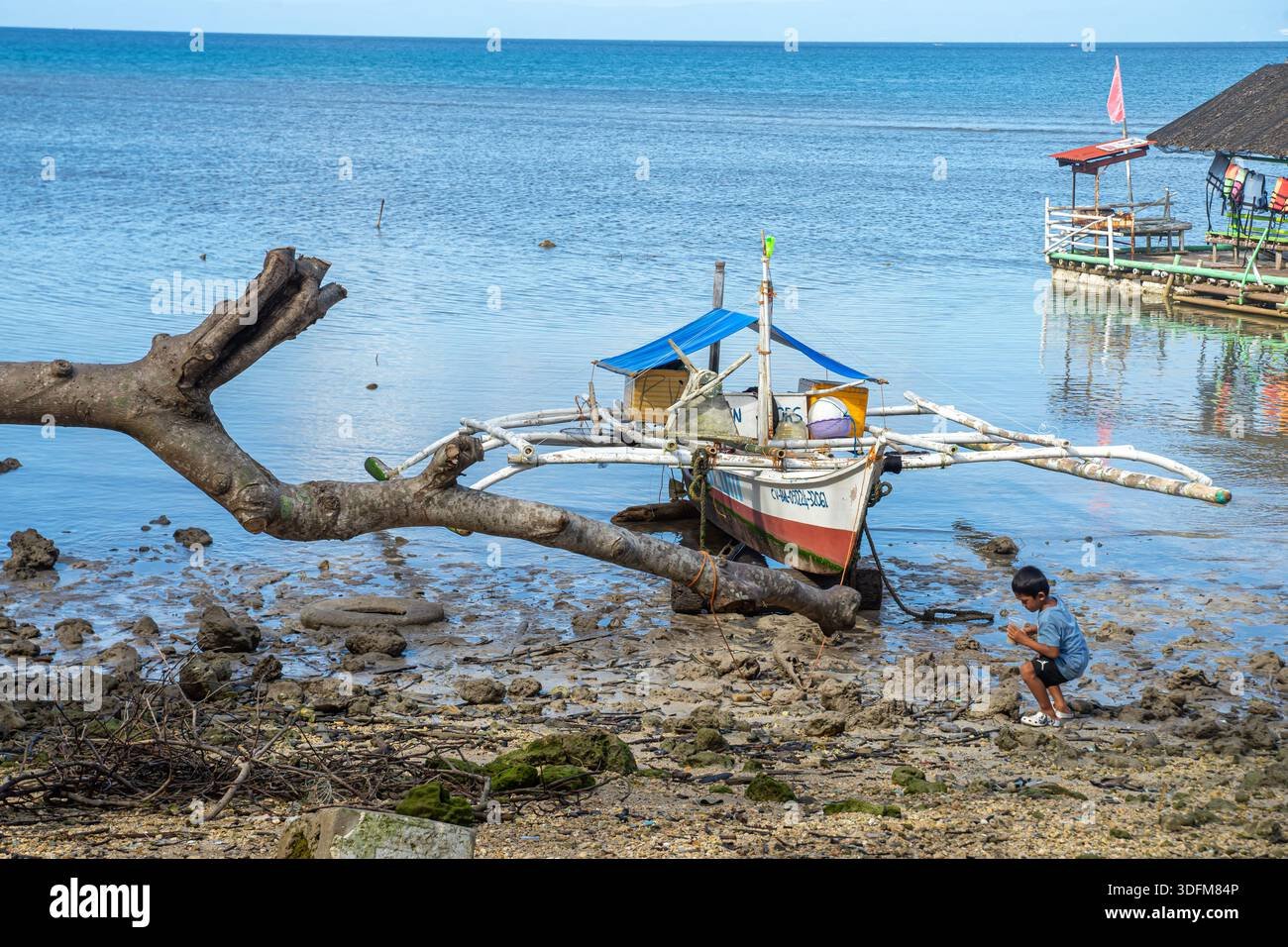
No vehicle defines the Philippines like the banca — the outrigger canoe, scaled from one-man fishing craft to shaded day-tour vessels carrying thirty. Island-hopping days run on them: twin bamboo outriggers stabilise the swell, canopies shade the deck, and crews of two or three handle anchors, lunches and the swim-stop whistle. Larger bangka ferries run island-to-island routes where bridges fear to go, and private charters convert the same design into your family's personal ferry for the day.
Passenger wisdom for banca days: board barefoot or with slip-offs, stow bags in the designated dry zone, and follow crew instructions at swim stops — they read currents like cricket scores. Life vests are standard and correctly sized on package boats; wear them on open-water stretches if asked, no exceptions, no negotiating with the crew's mother-hen instincts. Tipping the banca crew at day's end is tradition and gratitude in one gesture — pooled, cheerful and well earned.

Charter tip: agree the day's route and return time at boarding, then let the crew adjust for tide and swell — their version of the schedule is always better than yours.
For private charters, three questions at booking separate the good boats: Is the crew licensed and the boat insured? Is snorkelling gear included and sized? Is lunch cooked fresh or catered? The answers cost nothing and predict the day precisely. Then, once aboard, practise the finest skill in Philippine travel: letting go. The crew knows where the turtle naps, where the reef glows and which sandbar the tide will serve at noon — hand them the map in your head, and they will return it improved.
06.City Transport: Manila, Cebu & Beyond
Cities run on their own physics. Manila moves best on the elevated trains (LRT/MRT) for main corridors, Grab cabs for door-to-door, and hotel-arranged vehicles for everything on a schedule — traffic is legendary, so plan arrivals and departures with buffer. Cebu runs similar patterns at friendlier scale; Davao is famously orderly; and provincial cities default to tricycles and multicabs within minutes. The MRT avoids EDSA's parking-lot moods; the Pasig River ferry adds a scenic commute nobody believes until they ride it.
Package travellers rarely wrestle with any of this — airport meet-and-greets, private coaches and pre-booked day tours cover the metro chapters. Independent travellers should save hotel addresses offline, keep small bills for jeepney fares, and adopt the local commuting skill of looking confident. Cities here are loud, warm and functional; navigate them with the same patience you would extend to a large, affectionate family, and they respond in kind.
07.What to Book vs What to Improvise
- Book ahead: international flights, domestic island flights, major ferries, private transfers — anything with a schedule and limited seats.
- Improvise freely: tricycles, jeepneys, habal-habal, market taxis — abundant, cheap, half the fun.
- Let the package handle: airport pickups, inter-island chains, boat charters, day-tour vehicles — pre-booked, voucher-backed, weather-monitored.
- Never book: transport through unlicensed touts at piers and airports; the official counters cost the same and come with receipts.
Follow that division and the country's transport becomes what the brochures promise: adventure where you want it, certainty where you need it. The Philippines rewards travellers who respect its rhythms — early boats, patient traffic, weather-appointed schedules — and punishes none who arrive prepared. Getting around here is not the tax you pay for the beaches; it is the scenery you earn between them.
A closing word for the transport-nervous: every mode in this guide has carried millions of travellers, including millions of first-timers, grandparents and nervous swimmers, and the system has opinions about safety that it enforces without asking. Weather pauses sailings, crews double-check vests, and strangers will walk you to the correct jeepney with directions delivered in full sentences. Getting around the Philippines is not a test you pass; it is a system that catches you. Relax into it, keep the dry bag handy, and enjoy the rare country where the journey earns its keep daily.
08.Frequently Asked Questions
Honest answers to the questions travellers ask our desk most often about getting around the philippines.
What is the best way to travel between Philippine islands?
Domestic flights for long hops (Manila to El Nido, Coron, Caticlan or Siargao) and fast ferries for the famous short crossings (El Nido to Coron, Cebu to Bohol). Packages pre-book both with aligned timings, removing the two riskiest pieces of island travel.
How do jeepneys and tricycles work?
Jeepneys run fixed routes — hail one, hop in, pass your fare forward and press the stop button when ready. Tricycles are motorbike sidecars for short hops; agree the fare before boarding or follow posted rates. Both are cheap, abundant and thoroughly enjoyable.
Is it safe to take ferries in the Philippines?
Yes, on licensed operators with proper safety records — which packages guarantee. Life vests are standard, sailings pause in rough weather, and crews are weather-wise professionals. The El Nido to Coron fast ferry and Cebu to Bohol routes run daily in season with strong safety reputations.
How much buffer should I leave for Manila traffic?
Generously much — three hours before domestic flights and four before international departures when crossing the city at peak hours. The elevated trains help on main corridors, but packages schedule hotel pickups around traffic patterns so travellers rarely negotiate it at all.
Do I need to book island-hopping boats in advance?
For peak-season dates and private charters, yes — boats allocate early. Shared tour boats fill more slowly but still reward advance booking. Packages include hopping days with licensed crews, life vests and gear, confirmed before you land.
Can I travel the Philippines without speaking the local language?
Entirely — English is an official language used in signs, tickets, announcements and menus everywhere. A few Tagalog greetings earn delighted responses, but navigation, negotiation and emergencies all work in English across the country.
Ready when you are: every enquiry is free and without obligation. Tell us your travel month and group size — a real travel specialist (not a bot) replies within 24 hours, or WhatsApp us for a same-day answer.