
Three weeks is not a longer holiday — it is a deeper one. With twenty-one days you can cross the Philippines properly: the rice terraces and history of Luzon, the lagoons of Palawan, the wildlife and waterfalls of the Visayas, and the surf-and-palms rhythm of Siargao. This itinerary shows how the grand route fits together without becoming a forced march — the pacing rules, the transfer logic, and the rest days that keep the third week as fresh as the first.
01.The Grand Design: Four Chapters, One Flow
The three-week arc runs in four chapters, ordered to manage energy as much as geography. Chapter one opens in Manila and climbs north to the Cordillera rice terraces — culture and cool air before the beaches. Chapter two flies south to Palawan for the lagoon days every traveller dreams about. Chapter three crosses to the Visayas for whale sharks, canyons and hills. Chapter four closes on Siargao or Boracay — surf, palms and slow sunsets — before the flight home.
The order matters. Start with the demanding travel (mountain roads) while legs and enthusiasm are fresh; place beach chapters after, when the body wants stillness; end on an island with an easy airport. Roughly: four nights Luzon, five Palawan, five Visayas, five Siargao or Boracay, with two flex days floating between chapters for weather, rest or a town you fall for. Three weeks is long enough to change plans twice — that is the luxury short trips cannot afford.
- Days one to four: Manila and the Cordillera terraces.
- Days five to nine: Palawan — El Nido and Coron.
- Days ten to fourteen: Cebu and Bohol.
- Days fifteen to nineteen: Siargao or Boracay finale.
02.Chapter One: Manila and the Cordillera
Begin with a gentle Manila day — the Spanish-walled streets of Intramuros, the baywalk sunset, and the country’s best food scene as your jet-lag cure. Then ride north into the Cordillera, where mountainside rice terraces climb in green stairways older than any map. Base yourself in the highland towns, walk between villages with a local guide, meet the weavers, and eat in communal kitchens where the menu is whatever the valley grew.
The highlands also deliver the trip’s cool air — pack one warm layer — and its deepest culture: terrace farming here is living heritage, not a viewpoint. Two nights in the mountains usually suffice before descending for the flight south. Travellers with less mountain appetite can swap this chapter for Taal’s crater lake and Tagaytay’s ridge — but most who make the climb call it the trip’s unexpected favourite.
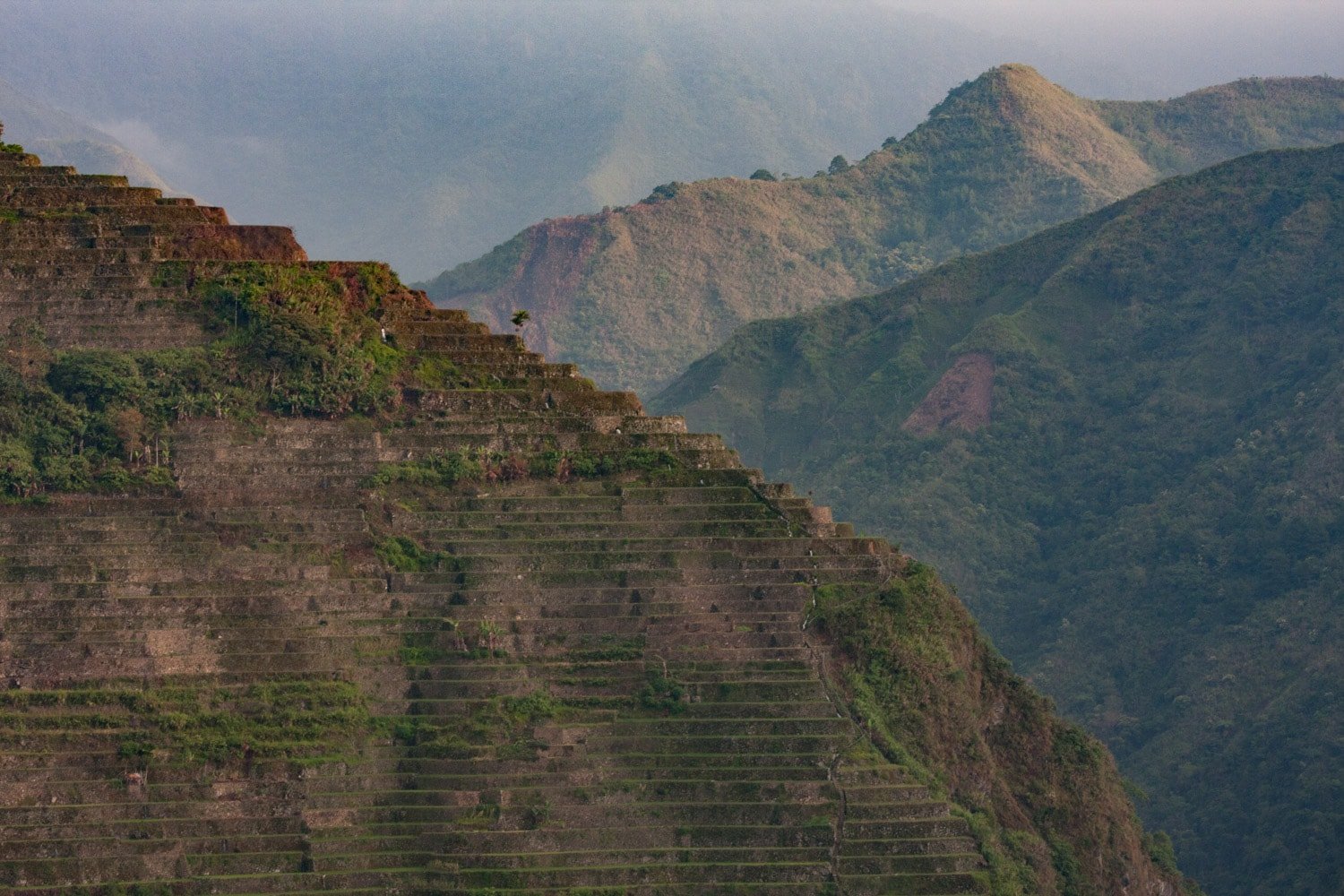
Roads in the mountains wind; MotionEaze or ginger sweets in your daypack earn their place. The scenery pays every bend.
03.Chapter Two: Palawan’s Lagoons
Fly south to El Nido for the postcard chapter: Bacuit Bay’s lagoons by kayak, hidden beaches behind limestone doors, and Nacpan’s long golden arc. Two boat days and one beach day form the rhythm; the ferry to Coron adds lakes of mirror clarity, shallow wrecks alive with coral, and the hot-springs sunset that closes each Palawan evening here. Five nights across the two towns is the sweet spot — long enough to repeat favourite spots, short enough to keep the calendar honest.
Palawan also teaches the trip’s first pacing lesson: book boat days in the morning and defend the afternoons. Lagoons are calmest early, crowds are thinnest, and the late light belongs to beach bars anyway. By the time you fly east to the Visayas, you will have filled two memory cards and still not be tired — that is the design working.
04.Chapter Three: Cebu, Bohol and the Sardine Tornado
The Visayas chapter swaps cliffs for wildlife. From Cebu: the dawn whale sharks of Oslob, the turquoise jumps of Kawasan canyoneering, and Moalboal’s millions-strong sardine swirl. A fast ferry carries you to Bohol for the Chocolate Hills, the tiny tarsiers of a licensed sanctuary, and Panglao’s calm, shallow beaches — where a day of deliberately nothing earns its place in the itinerary. Five nights split across the two provinces keep transfers short and mornings unhurried.
This chapter carries the trip’s most emotional moments — swimming beside a bus-sized fish that eats only plankton rearranges something in you. Choose operators who follow the strict interaction rules; our desk works only with them. The geography here is forgiving: short hops, frequent ferries, and plenty of good food between stops, which is exactly why it sits in the middle of the three-week arc.

Sea state note: the sardine run and turtle snorkelling both go calmest before noon. Book the early boats; the fish keep the same schedule they always have.
05.Chapter Four: Siargao or Boracay — Choose Your Ending
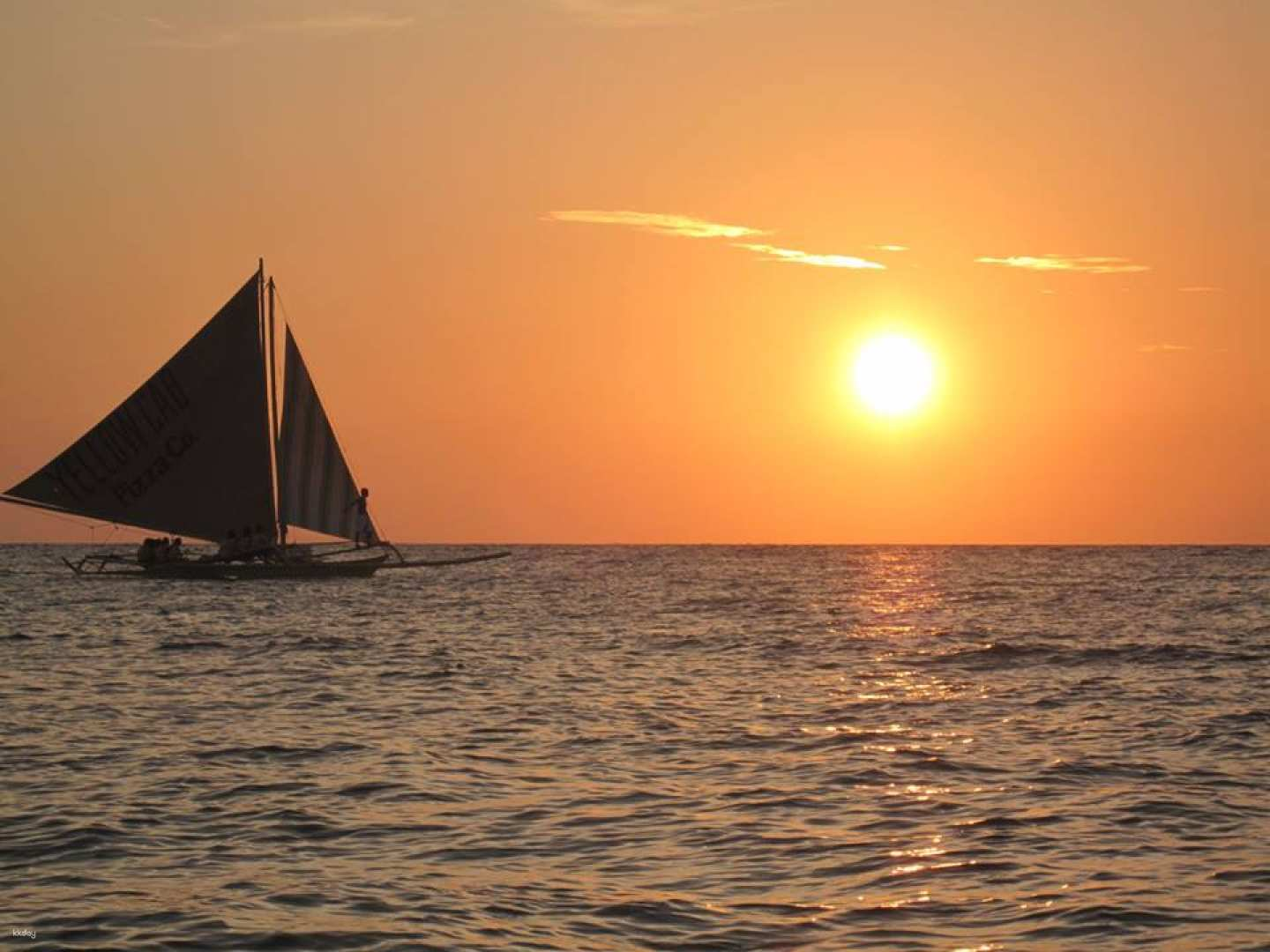
The final chapter is a personality choice. Siargao suits travellers who want their finale active: beginner-friendly surf breaks, the naked-island sandbars of a three-island hop, the turquoise lagoon at Sugba, and the palm-lined road at golden hour — plus a café scene that turns evenings social. Boracay suits travellers who want their finale effortless: four kilometres of powder sand, paraw sunset sails, beachfront dinners and the country’s best-organised beach logistics.
Either way, protect the last two nights for stillness: no tours, no transfers, just the beach routine you have perfected over three weeks. The finale island’s airport connects home smoothly — Siargao via Cebu or Manila, Boracay via Caticlan or Kalibo — so departure day stays short. Three weeks should end the way a good song does: on a held note, not a fade-out.
06.Pacing, Laundry and Other Real-World Logistics
Long trips live or die on logistics nobody photograph. Laundry: every base has cheap same-day services — pack for five days, wash weekly. Connectivity: a local SIM or eSIM covers all four chapters. Money: cards work in cities and resorts; carry cash for islands, tricycles and market stalls. Health: bottled water throughout, reef-safe sunscreen, and a small kit for scrapes and stings. These five minutes of planning buy three weeks of smoothness.
Pacing rules scale up, not down: one activity per half-day, no tours on transfer days, and one full rest day per week — non-negotiable in week three when the sand finally calls louder than any viewpoint. Travellers who respect the rest day reach the airport with the energy they arrived with; travellers who fill it spend the flight home asleep, which is fine too.
Book the grand route as one package and every van, ferry, boat and bed is confirmed before you pack. Enquiries are free — the three-week version of this page is one message away.
07.Variants: Reshaping the Three Weeks
The grand route bends to temperament without losing its spine. The beach-heavy variant swaps the Cordillera chapter for extra Palawan nights and a Siquijor coda — the edition for travellers who meet mountains on other holidays. The culture-heavy variant deepens Luzon: more highland nights, the heritage cities at an unhurried pace, and the coast arriving later, earned. The celebration variant keeps the classic order and upgrades the seams: private boats on the marquee days, the resort chapters chosen for their decks, one staged evening per region.
Adventure editions trade the finale’s stillness for Coron’s wrecks and Siargao’s coaching blocks; family editions slow the pace and duplicate the calm-water stops. In every variant the design constants hold — one region per week, mornings for the sea, rest days defended, the finale on the quietest sand of the trip. Three weeks is a generous canvas; these variants prove it holds any picture a traveller brings.
- Beach-heavy — terraces traded for tides.
- Culture-heavy — the coast arrives earned and later.
- Celebration — same spine, upgraded seams.
08.Long-Trip Logistics, Three Weeks Edition
Three weeks amplify everything, including the logistics layer, so the edition matters. The wardrobe shrinks: five days of clothing, laundry weekly in every base, and the jacket that earns its place exactly once — the Cordillera evening — then rides the bag like a loyal passenger. The money system matures: weekly cash caches, a running note of the next reliable ATM, and the group treasurer role if travelling as a tribe. Bookings tier: the peaks anchored early, the middle semi-structured, the final week deliberately loose — three weeks reward travellers who leave room for the country’s own suggestions.
Health gets a schedule: the rest day per week is medical advice wearing a hammock; hydration and sunscreen become reflexes by week two. Documents live twice: physical folder and cloud copies, because three weeks is long enough for one to test the other. And the return buffer — the spare night before the international flight — stops being advice and becomes doctrine at this duration. Long trips do not need more planning; they need the same planning, respected longer.
- Wardrobe of five — laundry weekly, jacket loyal.
- Bookings tier — anchored peaks, loose final week.
- Return buffer as doctrine — non-negotiable at three weeks.
09.Frequently Asked Questions
Honest answers to the questions travellers ask our desk most often about three-week Philippines itineraries.
Is three weeks too long for the Philippines?
Not for this country — three weeks is the first duration that covers Luzon's culture, Palawan's lagoons, the Visayas' wildlife and a finale island without rushing. The key is four chapters with flex days, not ten destinations. Long trips here reward pacing, not stamina.
What does a three-week itinerary cost compared to shorter trips?
Line items simply repeat: more nights, more boats, more inter-island flights. Style decides the total — simple, comfortable or celebratory — rather than duration alone. Share your comfort level and our desk returns a transparent plan; comparing is free and obligation-free.
Which finale island suits a three-week trip best?
Siargao for travellers ending active — surf lessons, island hops, social evenings. Boracay for travellers ending relaxed — powder sand, sunset sails and effortless logistics. Both connect home easily. Choose the ending that matches the energy you want to fly home with.
How do I handle laundry and packing for three weeks?
Pack for five days, not twenty-one: every base offers inexpensive same-day laundry. Soft bags beat hard suitcases for boats and small planes. One warm layer covers the cool Cordillera nights; everything else is island-light.
Can the three-week route be customised?
Always. Swap the Cordillera for Taal and Tagaytay, trade Bohol for extra Palawan nights, or split the finale between Siargao and Boracay. Send your dates and interests and a specialist redraws the chapters around you — free, and without any obligation to book.
Can the three-week route skip the mountains entirely?
Yes — the beach-heavy variant swaps the Cordillera for extra Palawan nights and a quiet-island coda such as Siquijor. The week-per-region architecture, rest days and sand finale all survive the swap; only the opening chapter changes scenery.
How flexible is the three-week plan once travelling?
Deliberately flexible: two flex days float between chapters by design, and the anchor bookings sit only at the peaks — El Nido beachfront, the finale island. Travellers reshuffle the middle freely; the desk re-times crossings and stays as the month reveals its preferences.
What logistics change when a trip runs three weeks?
The wardrobe shrinks to five laundry-ready days, bookings tier into anchored peaks and a deliberately loose final week, cash planning runs weekly, health habits become reflexes, and the spare night before the international flight turns from advice into doctrine. Long trips need the same planning, respected longer.
Ready when you are: every enquiry is free and without obligation. Tell us your travel month and group size — a real travel specialist (not a bot) replies within 24 hours, or WhatsApp us for a same-day answer.